A Parent's Guide by Bloom To Life
Every heartbeat tells the story of a new life.
Hearing that your child has Congenital Heart Disease (CHD) can be overwhelming. The good news is that advances in pediatric cardiac care mean many children with CHD can live healthy, active lives when diagnosed and treated early. This guide explains CHD in simple language for parents, caregivers, and supporters.
What is Congenital Heart Disease?
Key Facts
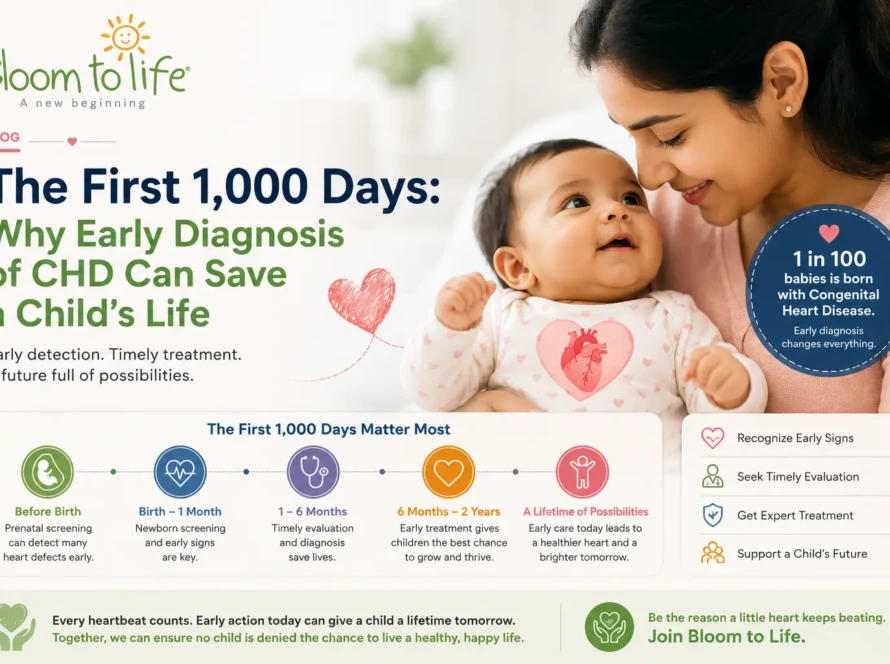
- CHD affects approximately 1 in every 100 babies born worldwide.
- It is the most common birth defect.
- Many forms of CHD are treatable or repairable.
- Early diagnosis greatly improves outcomes.
- With proper care, most children can grow up to lead fulfilling lives.
What Causes CHD?
In most cases, there is no single identifiable cause. Genetics, maternal illnesses, certain infections during pregnancy, or environmental factors may contribute, but many babies with CHD are born to healthy parents with no known risk factors.
Signs Parents Should Never Ignore
- Bluish lips or fingertips
- Rapid or difficult breathing
- Difficulty feeding
- Poor weight gain
- Excessive sweating during feeding
- Frequent respiratory infections
Common Types of CHD
| Condition | Description |
|---|---|
| VSD | Hole between the lower chambers of the heart. |
| ASD | Hole between the upper chambers. |
| PDA | A blood vessel that remains open after birth. |
| Tetralogy of Fallot (ToF) | Combination of four heart abnormalities. |
| TGA | Major arteries arise from the wrong chambers. |
| Coarctation of the Aorta | Narrowing of the main artery. |
Diagnosis
Treatment Options
- Regular monitoring
- Medication
- Catheter-based procedures
- Open-heart surgery
- Long-term follow-up with a pediatric cardiologist
Life After Treatment
Thousands of children with repaired congenital heart disease attend school, play sports appropriate to their condition, pursue careers, and raise families. Regular follow-up helps ensure the best long-term outcomes.
Frequently Asked Questions
Is CHD contagious?
No.